1. Make safe and stop the source
Electrical, structural and contamination hazards must be addressed before flooring work begins. Photograph affected rooms and avoid lifting materials where sewage or other contaminated water may be present.

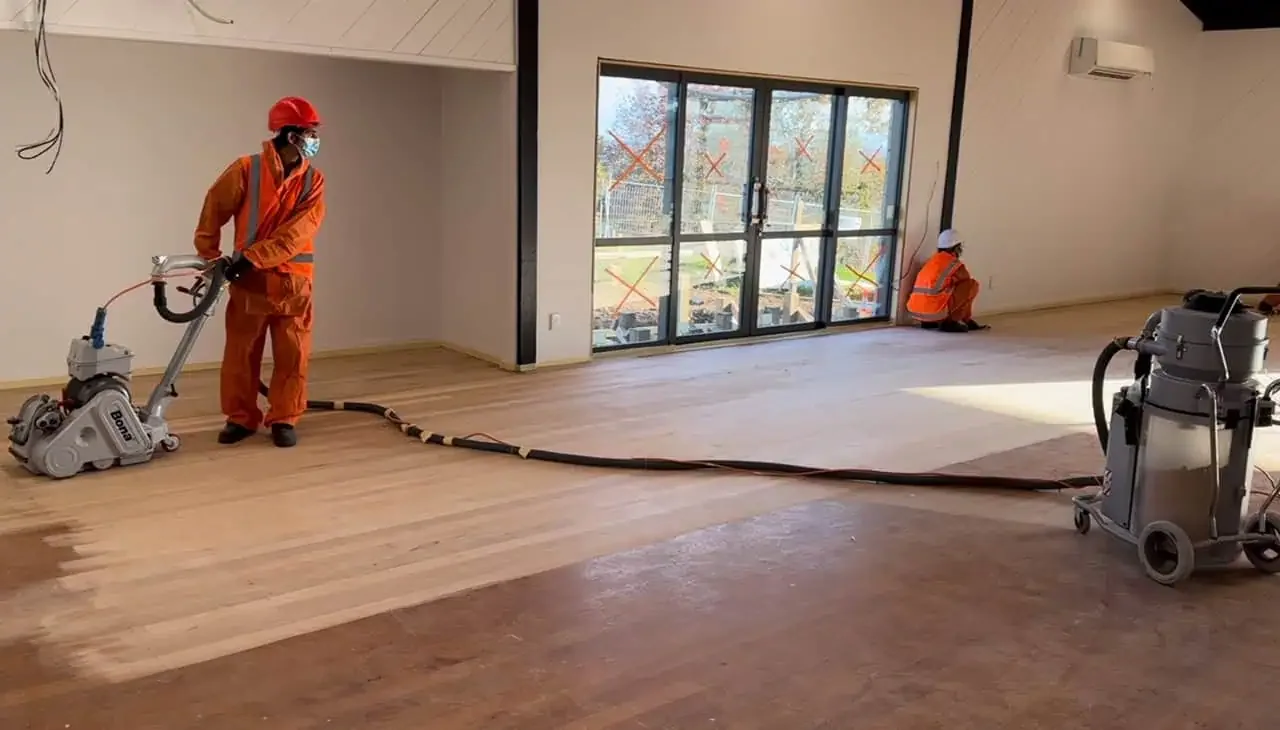
Post-drying flooring assessment and restoration
Once active water has been extracted and the building structure is properly dried, FlooringPro assesses what can be repaired, refinished or must be replaced. We provide a flooring-specific plan for timber, laminate, vinyl, carpet and tiled floors across Auckland.
Quick answer
Floor finishes should not be repaired or replaced while moisture remains trapped in underlay, substrates, wall edges or subfloors. For active flooding, extraction, moisture mapping and structural drying, start with specialist Auckland flood and water-damage restoration. FlooringPro follows with material-specific assessment, repair, refinishing or replacement after drying evidence shows the area is ready.
The right sequence
A clear division of work protects the property and prevents premature installation over damp materials.
Electrical, structural and contamination hazards must be addressed before flooring work begins. Photograph affected rooms and avoid lifting materials where sewage or other contaminated water may be present.
A restoration specialist extracts standing water, checks moisture beyond the visible surface and records drying progress in underlay, framing and subfloors.
After drying, we inspect finish, joints, adhesives, substrate condition, movement, staining and odour to determine which areas are serviceable.
The scope may include selective board replacement, timber sanding and coating, vinyl or laminate replacement, carpet relaying, or substrate preparation.
Material-by-material decisions
Boards can cup, crown, gap, stain or lift as moisture changes. We check board and subfloor moisture, movement and finish condition before recommending acclimatisation, selective repairs, sanding or replacement. Sanding too early can permanently distort the finished profile.
Swollen cores, peaked joints and damaged locking systems are often not reversible. We assess how far moisture travelled, whether underlay and the substrate are dry, and whether selective or complete replacement is appropriate.
Sheet and plank vinyl may show lifting, bubbling, staining or adhesive failure. The visible finish can appear dry while moisture remains below. We review bond condition, substrate moisture and preparation requirements before replacement.
The decision depends on water category, response time, backing condition, odour and whether underlay or the subfloor remains affected. Cleaning alone is not a substitute for structural drying. Once cleared, FlooringPro can assess relaying or replacement.
Tiles may remain intact while water moves through grout lines or adjacent assemblies. We check loose or drummy areas, adhesive and grout condition, substrate movement and transitions before repair or replacement.
Concrete can retain moisture long after surface water is gone. Coatings installed too early may blister or lose adhesion. Moisture readiness and surface preparation must be confirmed before a new coating system is selected.
Assessment evidence
Retain incident photos, source and timing notes, restoration moisture records, removal decisions, product details and room measurements. FlooringPro can document visible flooring damage and provide a written scope for flooring repair or replacement. Insurance approval remains the insurer's decision.
Where practical, keep spare boards, planks, tiles, carpet labels or previous invoices. Matching discontinued colours and batches can affect whether a localised repair is visually acceptable.
Common questions
Sometimes. The answer depends on contamination, exposure time, board movement, subfloor condition and moisture readings. A drying period is usually required before a reliable sanding or replacement decision.
No. Surface appearance does not prove that underlay, concrete, timber substrates or wall edges are dry enough. Installation should follow recorded moisture clearance and product requirements.
FlooringPro's role is flooring assessment and restoration after the emergency drying stage. Active extraction, moisture mapping and structural drying should be handled by a qualified water-damage restoration specialist.
Not necessarily. We assess transitions, batch matching, structural continuity, contamination and appearance before defining whether repair can be localised.
After restoration
Once repair or replacement is complete, suitable cleaning, protection and inspection can extend service life. See our Auckland floor-maintenance guidance for material-appropriate care.
FlooringPro provides flooring assessments and restoration scopes across Auckland, subject to site access, material type and project requirements.
Tell us which flooring materials were affected and whether professional drying has been completed.
Request a written quote
Share the site details and FlooringPro will follow up. Prefer to talk? Call 0800 452 102.
What happens next